
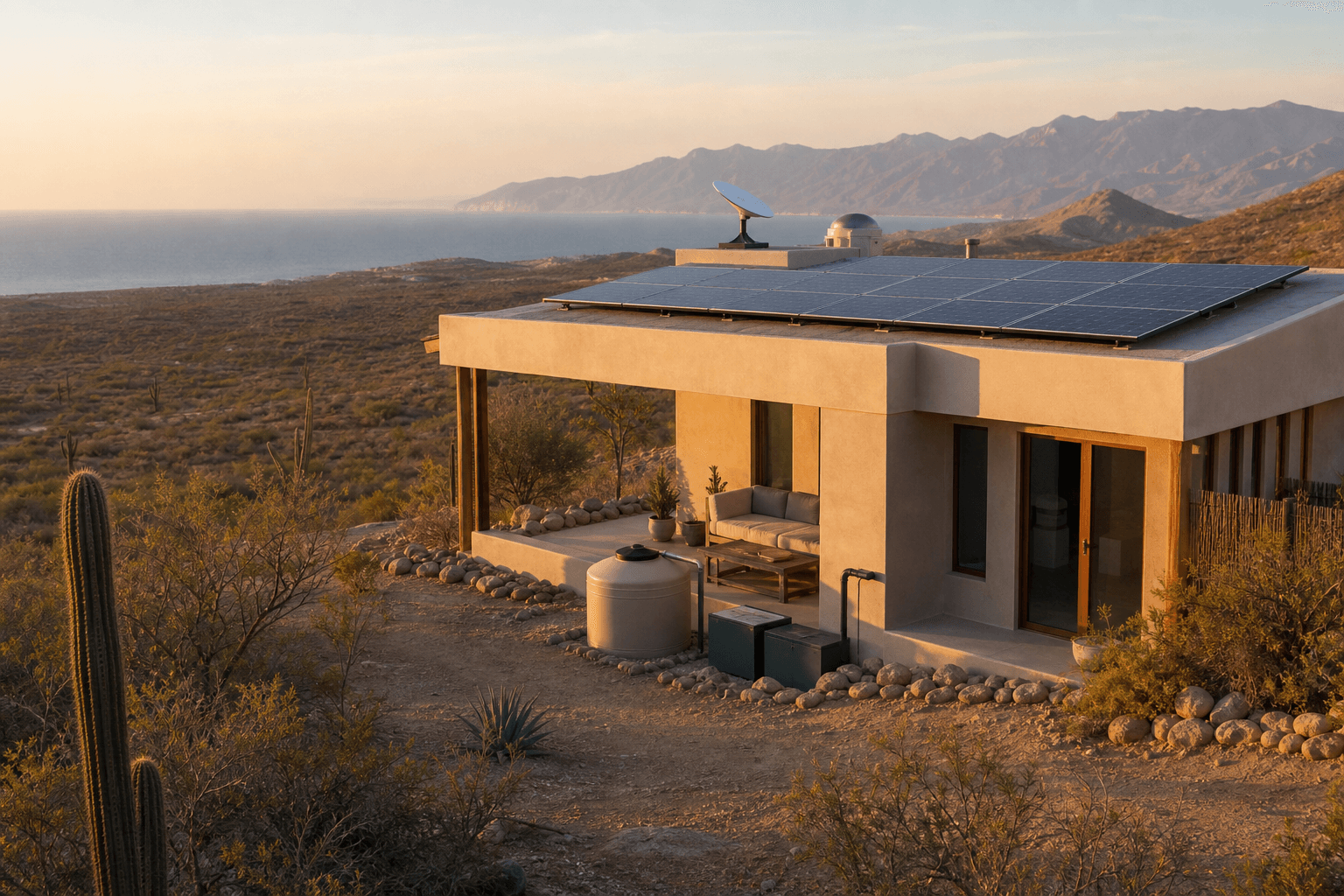
Every property manager in Baja California Sur will tell you they handle storm prep. The difference between a talking point and a plan becomes visible in the seventy-two hours before a named storm makes landfall — and in the seventy-two hours after, when access roads are washed out, cell coverage is down, and every vendor in the region has two hundred calls ahead of yours.
Before the season, not before the storm
Preparation that happens in June is planning; preparation that happens the day before landfall is triage. A serious plan includes a pre-season audit: roof, drainage, and scupper inspection; palapa and shade-structure condition; shutter hardware tested (not just present); loose exterior items inventoried; trees trimmed away from structures and panels. For off-grid homes, add: battery bank health check, generator service with fresh fuel and verified auto-start, cistern levels and pump condition, and photographic documentation of the entire property — the before record that insurance adjusters ask for and almost nobody has.
Insurance itself belongs in this phase. Confirm the policy is active, understand what hurricane deductibles look like, and know exactly what documentation the carrier requires. Discovering the answer after the event costs real money.
The 72-hour window
Once a storm enters the forecast cone, the plan converts to a countdown. Who physically goes to the property, and when? In what order do shutters close, furniture moves, and systems shut down? Solar arrays have specific pre-storm procedures — some owners are surprised to learn that a grid-tied inverter behaves differently than an off-grid system when power fails. Propane gets shut at the tank. Vehicles and equipment move to high ground; on the East Cape, high ground means thinking about arroyos, not just elevation.
The plan also covers people: if the home has staff or tenants, who confirms their safety plan? Who is the single point of contact for the owner, and on what channel — because WhatsApp works until cell towers don't, which is precisely why Starlink-equipped homes should have their terminal secured last and restored first.
After the storm: the part most plans skip
The first post-storm task is not repair — it is documented inspection. Photographs of all damage before anything is moved or cleaned, a structured condition report, and a triage list separating safety issues (electrical, water intrusion, structural) from cosmetic ones. Insurance claims live or die on this documentation.
Then comes the reality of post-storm logistics: road access on the East Cape may take days to restore, and vendor availability is the true bottleneck — every roofer and electrician in the municipality is booked within hours. This is where established vendor relationships stop being a brochure word and become the difference between a two-week recovery and a two-month one. A manager with standing relationships and documented approval authority can commit crews while the owner is still reading the damage report.
Finally, systems restart in a specific order: inspect before energizing, water quality checked before cisterns feed the house, generator and solar brought back under controlled conditions.
Questions to ask whoever watches your home
Does storm monitoring happen continuously during the season, or only when a storm is named? What is the written pre-storm procedure for your systems? Who physically reaches your property, and how, if the arroyo is running? What does post-storm documentation look like — can you see an example report? The answers tell you quickly whether you have a plan or a promise.